


Boost Curb Appeal Before Selling with a Fresh Exterior Paint Coat

A home can lose buyer interest before anyone steps through the front door. Peeling trim, faded siding, scuffed shutters, or a tired front door can make a house feel neglected, even when the inside is clean and well cared for.
That is why a fresh coat of exterior paint is one of the simplest ways to boost curb appeal before selling. Paint changes how a home looks from the street, but it also sends a message. It tells buyers the property has been maintained. It helps listing photos look sharper. It can make older features feel more current without a full remodel.
Before spending money on big landscaping, new fixtures, or major exterior upgrades, start with the surface buyers notice first. Exterior paint covers years of sun, rain, dirt, and wear in a way that feels immediate and practical.

First impressions shift buyer expectations
Buyers often form an opinion in the first few seconds of seeing a property. That first impression may come from an online listing photo, a drive-by, or the walk from the curb to the front door.
Exterior paint plays a large role in that moment because it covers so much visual space. Siding, trim, shutters, porch posts, railings, and doors all work together to create the character of the home. When those surfaces look faded or uneven, buyers may start looking for problems.
A worn exterior can raise questions like:
Has the home been maintained?
Will the new owner need to repaint right away?
Are there hidden repair issues?
Is the asking price too high for the condition?
Even if those concerns are not fair, they can shape how buyers feel. A fresh paint job helps reduce doubt. It makes the home look cleaner, newer, and more move-in ready.
This matters because curb appeal affects more than looks. It can influence how buyers judge the rest of the property. A sharp exterior can set a positive tone before the showing begins. A neglected exterior can make buyers more critical once they walk inside.
Paint is often easier than larger curb appeal projects
Many sellers know the outside of the home needs attention, but they do not know where to start. Large projects can become expensive or slow. Replacing siding, installing new windows, rebuilding walkways, or redesigning landscaping can take time and often involves more decisions than expected.
Exterior paint is different. It is visible, direct, and usually easier to plan. It can transform the same structure without changing the footprint of the home.
A proper exterior paint project can refresh:
Siding
Trim
Fascia and soffits
Shutters
Front doors
Garage doors
Porch rails
Columns
Window surrounds
In many cases, sellers do not need to paint every surface. Sometimes the siding still looks fine, but the trim has dulled. Other times the front door and shutters need the most attention. A thoughtful refresh can make the whole home look better without overdoing it.
The goal before selling is not to create the most personal design. The goal is to make the home feel clean, cared for, and easy for buyers to imagine owning.
The right exterior color can make the home look newer
Color choice matters when selling. A favorite bold shade might feel fun while living in the home, but buyers often respond better to colors that feel balanced and widely appealing.
Neutrals remain popular because they work with many roof colors, stone accents, brick tones, and landscaping styles. That does not mean the home has to look bland. A simple body color with strong trim contrast can give the exterior depth and polish.
Good selling-friendly exterior colors often include:
Warm white
Soft gray
Greige
Taupe
Light beige
Cream
Slate blue
Muted sage
Charcoal accents
The safest color is usually one that fits the architecture and the surrounding homes. A coastal-style house may look great in soft blue-gray with white trim. A craftsman home may suit earthy green or warm taupe. A brick home may need paint colors that complement the undertones in the brick rather than fight them.
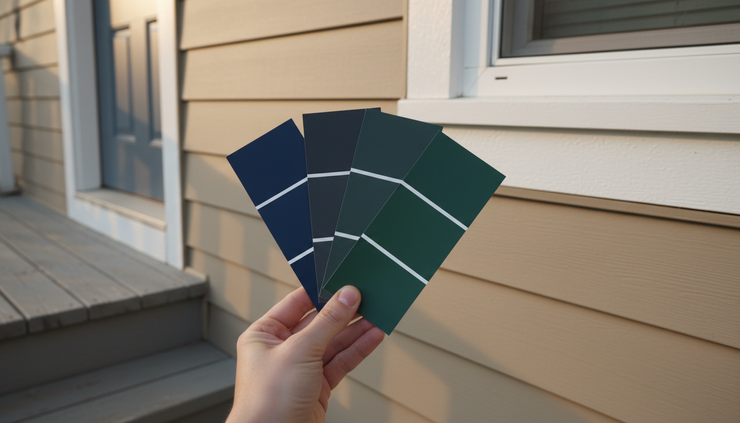
Test colors before committing
Exterior paint looks different outdoors than it does on a small card. Sunlight, shade, roof color, brick, stone, and landscaping can all change how the paint appears.
Before painting the whole home, test larger samples in a few spots:
A sunny area
A shaded area
Near the roofline
Beside brick, stone, or permanent accents
Near the front door
Look at the samples in the morning, afternoon, and early evening. A color that looks warm at noon may look too yellow at sunset. A gray that looks clean on a card may turn blue once it is on the siding.
Testing may feel like a small step, but it can prevent an expensive mistake.
Focus on the areas buyers notice most
If time or budget is limited, focus on the parts of the exterior that create the strongest impression. Buyers rarely inspect every square inch at first glance. They notice the front-facing surfaces, the entry, and anything that looks damaged or neglected.
The front door is one of the highest-impact areas. A fresh front door color can make the whole entry feel more welcoming. Black, navy, deep red, forest green, and warm wood-inspired tones can all work well, depending on the house.
Trim also makes a major difference. Crisp trim helps define windows, rooflines, porches, and corners. When trim looks clean, the whole exterior often looks sharper.
Garage doors deserve attention too, especially when they face the street. A faded garage door can make the front of a home feel worn even if the siding looks fine.
Area to refresh | Why it matters before selling |
Front door | It creates a strong entry point and shows well in listing photos |
Trim | It makes the home look cleaner and more finished |
Shutters | It adds contrast and can update an older exterior |
Garage door | It often takes up a large part of the front view |
Porch rails | It shapes the buyer’s first close-up impression |
Fascia and soffits | It reduces the look of age along the roofline |
Prep work matters as much as the paint
Paint can only do its job when the surface is ready. Skipping prep may save time at first, but it can lead to peeling, uneven coverage, and a finish that looks rushed.
Good prep usually includes washing the exterior, scraping loose paint, sanding rough edges, caulking gaps, repairing damaged wood, and priming bare spots. These steps help the new coat bond to the surface and look smooth.
A clean exterior also helps reveal issues before buyers see them. Soft wood, failed caulk, mildew, and cracked paint are easier to correct before the home is listed. Even small repairs can improve buyer confidence.

Clean first
Dirt, dust, pollen, mildew, and cobwebs can keep paint from sticking well. A thorough wash gives the surface a fresh start. Some homes need gentle cleaning, while others may need more serious washing.
The key is to match the cleaning method to the surface. Older wood siding, painted brick, stucco, and fiber cement can react differently to pressure and moisture. Too much force can cause damage.
Repair before painting
Paint should not hide problems that need repair. Rotten trim, cracked boards, loose railings, open seams, and damaged siding should be handled first. Buyers may not notice every repair, but they do notice when exterior features look solid and well maintained.
Prime where needed
Primer helps seal bare surfaces and supports even color. It is especially useful on raw wood, patched areas, stained sections, and places where old paint has been removed.
Fresh paint can improve listing photos
Many buyers first see a home on a phone or laptop. Exterior photos often decide whether they click, save, schedule, or move on.
A freshly painted exterior tends to photograph better because the surfaces look cleaner and the lines appear sharper. Trim stands out. The front door looks intentional. Colors look more even across the house.
This does not mean the home should look artificial. Buyers can spot heavy editing and unrealistic photos. The best result is simple: real curb appeal that shows clearly in natural light.
Before listing photos are taken, the exterior should look finished from the street. That means paint should be dry, tools should be cleared away, and the front area should be tidy.
Small details help too:
Sweep the porch and walkway
Clean the windows
Remove empty planters
Hide hoses and trash bins
Touch up chipped railings
Add a fresh doormat
Trim overgrown shrubs away from the siding
These are not major upgrades. They simply let the paint do its job.
Match the paint project to the selling timeline
Exterior painting needs the right weather and enough time to cure. Sellers should not wait until the last possible week before listing if they can avoid it.
Weather affects the schedule. Paint usually performs best in mild, dry conditions. Very hot days, cold temperatures, rain, heavy humidity, and strong wind can cause delays or affect the finish. The ideal timing depends on the paint product, the surface, and local climate.
Planning ahead also leaves room for touch-ups. Once the project is complete, look at the home from the curb, driveway, front walk, and across the street. These are the same angles buyers will see.
If the listing timeline is tight, choose the most visible improvements first. A full exterior paint job may be ideal, but a front-facing refresh can still help if the rest of the home is in fair shape.
If you have more time | If you have limited time |
Paint siding, trim, doors, and accents | Paint the front door and street-facing trim |
Repair damaged wood and caulk seams | Touch up chips, scratches, and worn edges |
Test several color samples | Use a proven neutral that fits the home |
Schedule painting before photos | Finish visible areas before showings start |
Choose a professional finish over a rushed one
Some homeowners can handle small touch-ups or a front door repaint. Larger exterior projects often benefit from professional skill, especially when the home has multiple stories, damaged trim, textured surfaces, or old layers of paint.
A professional painter can help with surface prep, product selection, safe access, and clean lines. They can also spot problems that may affect the finish, such as failing caulk, chalky siding, or moisture damage.
When selling, quality matters because buyers will see the work up close. Drips, uneven edges, missed spots, and paint on hardware can make the project feel careless. A neat finish suggests the home has been handled with care.
If hiring a painter, ask practical questions:
What prep work is included?
Which surfaces will be painted?
What paint product will be used?
How will plants, walkways, windows, and fixtures be protected?
How will weather delays be handled?
Are touch-ups included after the final walkthrough?
The answers help prevent confusion and make the finished result more predictable.

Do not over-personalize right before selling
Painting before selling is different from painting for personal taste. When living in the home long term, it makes sense to choose colors that express style and preference. When preparing to sell, buyer appeal should guide the decision.
Very bright colors, unusual trim combinations, and trendy high-contrast schemes can narrow the buyer pool. Some buyers love bold choices, but others see them as extra work.
A good sale-focused color plan feels fresh but not distracting. It should make the home look updated while still fitting the neighborhood. The exterior should stand out because it looks clean and maintained, not because it shocks the eye.
That balance is especially useful in competitive markets. A fresh, neutral exterior can help the home feel move-in ready without forcing buyers to repaint immediately after closing.
A fresh coat sets the tone for the whole sale
Exterior paint is not just a cosmetic detail. It frames the way buyers experience the property. It can make the home look newer, cleaner, and better cared for before anyone walks inside.
For sellers, that makes paint one of the most practical curb appeal projects to tackle before listing. It works on listing photos, drive-by impressions, open house arrivals, and private showings. It also pairs well with simple upgrades like trimmed landscaping, clean windows, new house numbers, and a tidy entry.
The best approach is straightforward. Choose a color that fits the home, prep the surface well, focus on visible details, and finish the project before photos and showings. A fresh exterior paint coat may not change the size or layout of a house, but it can change how buyers feel about it from the very first look.


Comments